hyposurface

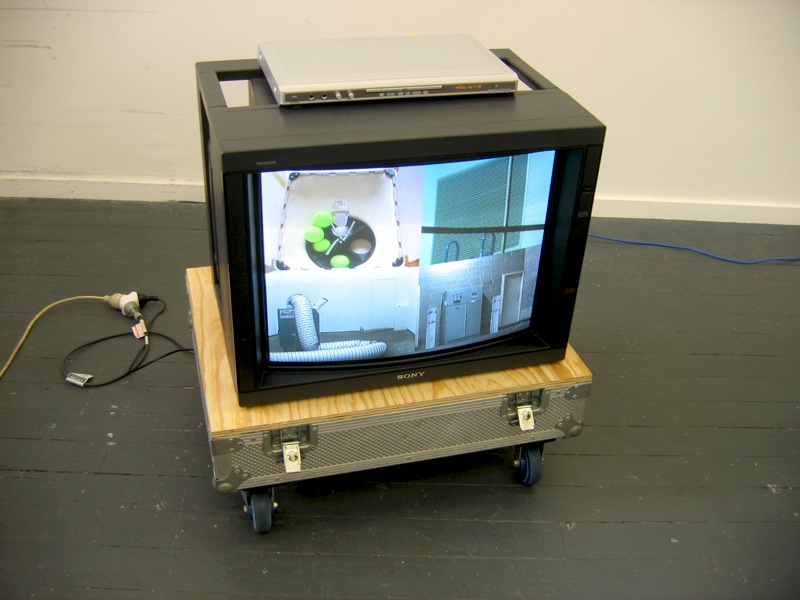
this is a shape changing wall, using pneumatic cylinders to actuate a wall made up of thousands of triangular tiles. the effect it can create is amazing and its done more than 10 years ago! this really stress me out. check out the two videos below:

http://vimeo.com/7006011

http://www.mediaarchitecture.org/aegis-hyposurface-kinetic-mediafassade/ 

Leave a comment

E-Paper by Sparkfun

I hope you all like this one,

Bildr:  E-Paper

E-paper was mentioned in one of the Task 1 submissions last semester. It is a type of display that retains the flexible qualities of paper and allegedly it’s content persists in the absence of power (Bzzt) ….. its finally on a Sparkfun Arduino-ready breakout board, and fortunately is not outrageously expensive.

http://www.sparkfun.com/products/10150

Also, see the tutorial about connecting it to an Arduino on Bildr

http://bildr.org/2011/06/epaper-arduino/

Bildr is absolutely amazing for explaining a diverse range of devices. If you need to find out how to work with specific Arduino tech, this is a great place to look for tutorials and free code you can use and abuse.

Paul R – [Opened]

Leave a comment

‘smile cup’”

For Irene, this is a cup design that can be use as a tool to communicate between gamily members.

http://www.designboom.com/weblog/cat/16/view/14771/smile-cup-by-nikita-mokhirev-fujitsu-judges-special-award.html

Leave a comment

Task1:“moJo iCuisine”


moJo iCuisine is a interactive restaurant with creative western food, fusion and molecular gastronomy, it provides the idea of interactive service design system into the western-style dining restaurant. According to the information, in this restaurant, each dining table in the restaurant is overlaid with interactive interfaces for restaurant consumers to browse menu, order dishes/drinks, play games such as poker while waiting for the meals, viewing advertisements, fill out opinion forms, and checking/paying the bills. The colorful and flourishing landscape composed of these interactive dining tables is also a catalyst to empower a joyful experience in the restaurant. I think there is an advantage of bring service process into interactive design is that is each customer’s behavior can be record and tracing. For example: table A has ordered a fish dish at 9.34 and table B has ordered drinks at 9.37 and table C has played poker for 10 minutes……And so on. These data could be helpful for the restaurant manager to do the research of customer and feedback.

THE INTERACTIVE DINING TABLE

moJo iCuisine’s (Interactive Dining Table) is a modular table unit equipped with touch sensors. Each table can be seated with two diners. The visual interface is projected from the top installation, and is specially designed to be viewed and interacted with on two opposite orientations. Diners could touch and toss the circular menu to select dishes to see introduction of each.

http://www.youtube.com/watch?v=CO8u6V9DGcw

This project is done by XXtraLab DESIGN which is one of the leading multimedia space design companies that specializes in designing & engineering tangible / intangible interfaces to deliver unique interactive experiences and services. And they have done a lot of interesting cases for clients so I recommended having a look of their website, hope it can help with some people’s project.

http://www.xxtralab.com/

Related works:

Inamo (UK)

iBar

Leave a comment

Animating Paper

Hi Jane this might give some idea with your technology!

Video

http://fkeel.blogspot.com/

Leave a comment

Task1: “The Pavilion of Dreams”


The Pavilion of Dreams is one of the exhibition venue designed for the 2010 Taipei International Flora Expo. And this venue is famous due to it contents high-tech interactive digital design elements within the exhibition. Each visitor will be accompanied by a dream flower on this magical journey, where Taiwan’s vivid and diverse ecology will be presented, and the harmonious beauty of nature will be experienced. This exhibition includes many amazing high techs such as FleXpeaker, Smart Controllable Liquid Crystal Glass, Non-Contact UWB Physiological Sensing Technology and Ultra High Frequency RFID Technology. I think they all look really interesting.

The Pavilion of Dreams on ABC

I saw a YouTube video about the “Pavilion of Dreams,” one of the 14 pavilions in this year’s 2010 Taipei International Flora Exposition. And it is pretty awesome and it might help to someone. The script on the screen is Chinese and I have found some rough translation. Enjoy it!

Pavilion of Dreams 3D Animation Film

大廳 Entrance Hall:
The entrance hall is a tunnel filled with more than 34,000 leaf-shaped “paper speakers” (which are bendable), airing the sound of leaves in nature and a 6-meter-wide machine flower blooms with the sound of leaves.

Then you choose a bracelet from one of the themes (health, work, relationship, etc). The bracelet is made with “RFID” technology (which could document and calculate your journey in the Dream Pavilion and at the end a unique flower would be made on the screen).

一廳 First Hall/Room
The theme of this hall is “bio-diversity.” The technology is standing 3D TV screen which does not require 3D glasses.

二廳 Second Hall
The theme of this hall is “biological mutual benefits,” or mutualism (not so sure about the real term). Walking into this hall is like walking into a maze and the maze walls are made of the electricity LCD glass that has the world largest bending angles. As you walk through the maze, your figure is projected onto the LCD glass which shows you as an insect, growing and carrying the pollens to help flowers. The music in this maze is the sound of falling pollens.

As you walk to another hall, you can raise your hand with the bracelet, wave to the TV screen, and your unique flower will appear on the TV screen.

三廳 Third Hall
The theme of this hall is the “blending of nature and human being”. As you stand in the 360-degree theater, the invisible and the world’s first UWB non-touch physical signal sensors read your heartbeat and breathing, and your heartbeat and breathing interact with the screen. The high-speed images move toward you, creating a total-sense experience.

四廳 Fourth Hall
The theme of the fourth hall is “love and dream.” As you walk through the virtual grasslands, your journey is coming to an end and your RFID bracelet finishes the calculation. The screen shows your personal unique dream flower which flows into the river and the sea and mingles with other flowers.

The End

For more information of the Pavilion of Dreams of 2010 Taipei International Flora Expo please visit:

http://dreams.2010taipeiexpo.tw/mp.asp?mp=2

http://video.udn.com/video/Item/ItemPage.do?sno=3-2B4-233b3-2F3433334-233-2B3-2F34304-233-2B-21-3D

Start with the 0:30 can see the RFID Technology

http://www.youtube.com/embed/70ufKxjC-V4

Leave a comment

Task – 1 Consolidated

The complete set of  Task 1 Assignments in pdf format

Paul Riaikkenen

http://dl.dropbox.com/u/4925397/S3198818%20-%20Task%201%20part%201-5.pdf

Leave a comment

GEORGE ORWELL – NINETEEN EIGHTY-FOUR

Nineteen Eighty-Four is a 1948 dystopian novel written by George Orwell, about an oligarchical, collectivist society where life in the Oceanian province of Airstrip One is a world of perpetual war, pervasive government surveillance, and incessant public mind control.

The inhabitants of Oceania have no real privacy. They live in apartments equipped with two-way telescreens, so that they may be watched or listened to at any time. Similar telescreens are found at workstations and in public places, along with hidden microphones.

These telescreens act as surveillance but also as a medium to communicate signifiers of the civilisations cultural memory. The screens have another sinister attribute in that the media they show is strictly curated and the authorities use this media to literally rewrite the past. The citizens memory of the past and the perceptions of excepted norms is therefore dictated and with the absence of personal artefacts or records they have little at their disposal spark an alternative opinion to what is presented to them.

Leave a comment

task 1 #4 colour changing garments

#1 Colour Changing Garments

Leave a comment

NICOLAS ROEG – THE MAN WHO FELL TO EARTH

The Man Who Fell to Earth is a 1976 British science fiction film directed by Nicolas Roeg, based on the 1963 novel of the same name by Walter Tevis, about an extraterrestrial named Newton (played by David Bowie) who crash lands on Earth seeking a way to ship water to his planet, which is suffering from a severe drought.
Roeg’s major theme explored in the film is media control and is symbolised by Newton acquiring knowledge about Earth and its human society through television broadcasts. Once on Earth, he becomes obsessed with the way television shapes human morals, thinking and behaviour, watching dozens of channels simultaneously to see if he can grasp some hidden truth about the deeply flawed creatures he has come to visit. His personal spaces become media rooms saturated with tiles of streaming imagery with its narrative abstractly compiled.

The film is a commentary on how media saturates and intervenes in the affairs of the world and is both welcoming and alienating in its desire to educate, entertain and inform. This film highlights our image saturated world in bowies station to station consumption of media, illustrating how we have become extremely visually literate, but also inundated with so many images that many of them don’t register on more than a superficial level. As Newton notes, “Strange thing about television is that it doesn’t tell you everything”.
Leave a comment

SWEATSHOPPE – VIDEO PAINTING

Multimedia performers Sweatshoppe have recently been pasting buildings with moving images all over New York. Mapping video projections to LED-lit paint rollers, Sweatshoppe lay their projections on a surface, paint-stroke by paint stroke. They call this new digital performance style “Video Painting”.
How it works:
The software controlling the video was written in Max. The paint roller does not use any sort of paint, it simply contains green LEDs. The software tracks the color green and outputs the ‘x’ and ‘y’ positions which are sent to drawing commands and the strokes are textured with video.
Sweatshoppe is video artists Bruno Levy and Blake Shaw. They plan on eventually releasing the software, but only after it is much more refined, buffed up with features and is user-friendly.

http://www.sweatshoppe.org/

Leave a comment

MULTIPLE INFORMATION SPACES

It is possible to create multiple information spaces whereby some digital information sits outside of the throw of a projector. Rather than changing the canvas to fit the viewing space, it is possible to change the position of a portable or micro projector to reveal information displayed outside the original position. This creates an illusion of exploring large information spaces embedded in the physical environment as if using a flashlight.
Using this technique, the display and interaction space can be expanded to cover almost an entire physical environment and support interaction concepts that are not possible on traditional desktop or handheld devices.
Building on these unique affordances of handheld projectors, Xiang Cao and Ravin Balakrishnan have explored techniques for dynamically defining and interacting with multiple information spaces embedded in the physical environment using projection. Enriching the interaction possibilities and leveraging human ability to perform bimanual tasks they used a passive pen to support annotations and local interactions.

http://www.cs.toronto.edu/~caox/

Leave a comment

Task:1 no7

In an effort to create change in how people view cycling as part of their lifestyle, Urban Futurists are proposing an iPhone application to transition from being a recreational cyclist to a social one. The app functions as a game, where you can compete with friends, earn rewards and find additional motivation through shared experience to get you cycling more often. This approach can be an addition to a system of relationships between cyclist. I familiar interface such as the iphone could then generate a larger cycling community therefore creating safety in numbers for commuting. With cyclist commutating with one another, even if they have never met, generating linked commuter pathways could help to prevent cycling accidents in and out of the CBD.

Leave a comment

Task 1 no. 4 – ‘Code 46′

From the movie Code 46, this concept is very similar to the current state of my major project.

This digital photo album is much like a traditional photo album, except that instead of paper, the pages are made from flexible displays. The video on the page is controlled with a virtual joystick. This is an example of an organic user interface. An everyday physical object is imbued with digital elements, while still providing a tangible photo viewing experience.

As OLED technology develops, this could become a real product available at stores. This sort of concept would aid in keeping with traditional embodied interfaces instead of moving towards screen-based interaction.

Leave a comment

Task 1. no.3 Children of Men

This holographic interface is shown in the sci-fi movie ‘Children of Men’.

The user is at the dinner table, playing a game similar to the rubiks cube, but as a hologram. It is controlled using his hand and what looks like some sort of sensors connecting to his fingers and communicating their movements into movements of the rubiks cube. He is not physically engaging with the hologram, instead, the movements his fingers make manipulate the state of the holographic rubiks cube.

This could potentially become a reality as holographic interfaces are advancing at a rapid rate.

This technology could impact several industries including (but not limited) to gaming and product design.

Leave a comment

Task 1 – Consolidated

Three more for task 1

http://dl.dropbox.com/u/4925397/Task%201%20%E2%80%93%202-5%20consolidated.pdf

Leave a comment

Task 1 number 3

Final Fantasy: The Spirits Within

Dr. Aki Ross’s surgical laser complete with holographic interface

In this scene a soldier is infected with a virus from the planet surface and which needs to be neutralized as to not infect the safe confines of the city. The operation is performed by laser but the interface is the most impressive part. While the patient lays on the operating table a hologram is projected above his body allowing the surgeon to have a real time view of what is happening within the body and where the virus is hiding. This display is linked to the laser control which also takes the form of a hologram where the surgeon’s hands and fingers are monitored and the rotation and position varies the position, depth and angle the laser will be fired at.

Leave a comment

Task 1 number 6

Tangible 3D Haptics on Touch Surfaces: Virtual Compliance

This project may or may not be useful for anyone but is a really interesting project to look at even if it just sparks an Idea. The purpose of this project is investigating a way to create a touch surface where by pressing a rigid surface you get a feeling of it being compliant via a series of imbedded feedback sensors. The creation of this illusion is a really interesting concept and could be adapted to many of the projects in the class. They propose a haptic only feedback which was found to create a more realistic illusion than systems using visual and audio cues to create the effect.

I have attached the project PDF

p1123-kildal

there is also a short video explaining how it works

its quite big and doesn’t want to upload if you want to see it search the heading of this post in the ACM digital library accessed via rmit library database search and you can see it there or ask me i have a copy


Leave a comment

Electroluminescent Fabric

Pang
this might help you:)

Leave a comment

Interactive materials

for anyone who’s planning to use some sort of fabric/material in their design, this might be helpful:)

Leave a comment