Links
From Physical Programming
Contents |
Cool youtubes
Daft Punk's Alive tour set design.
Robert Henke (Monolake) and Christopher Bauders ATOM project
Polygon Playground
Dual VGA monitor hack with Arduino
Richard Harvey - Floating Forecaster, Physical Information Display 2010
Beatfly
Nike Music Shoe
Making of Nike Music Shoe
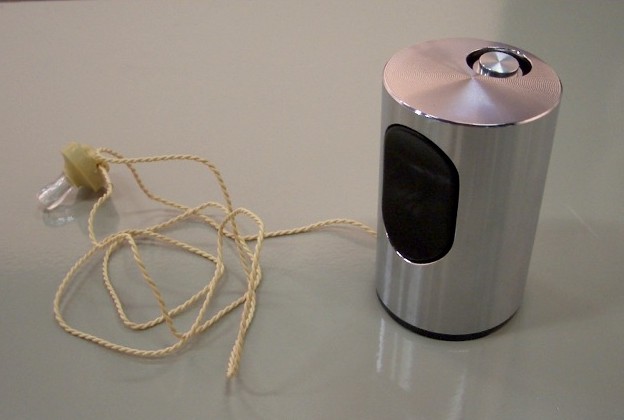
Fine Collection of Curious Sound Objects
X by Y, Kinetic Sculpture
Night Lights (YesYesNo -- Joel, Zach, Pete, Kyle, Todd and Daito)
electric stimulus to face -test
General References
Wikipedia definition of Physical Computing.
Dan O'Sullivan = nerdy guru and author from NYU.
Tom Igoe = another nerdy guru and author friend of Dan. Check out his book 'Making Things Talk'.
John Frazer, 'An Evolutionary Architecture', AA Publications, 1995. Out of print, but downloadable as .pdfs from here. The seminal book on architectural design as a computer-driven biological evolutionary process.
MOMA: Design and the Elastic Mind exhibition. Both the design of the site and the content, everything on here is amazing. Lots of physical computing crossover projects.
The Street as Platform post on Dan Hill's City of Sound blog. A sketch of a future/current scenario of the crossovers between pervasive computing and urbanism. Some really awesome ideas, like 'an open API for the city'. Everyone should read this.
Aaron Betsky (author) & Erik Adigard (graphic design), 'Architecture Must Burn: A manifesto for architecture beyond building', Thames and Hudson, 1999?
Bruce Wands, 'Art of the Digital Age', Thames and Hudson, 2006
Future Feeder. Just found this, dunno if it's any good, seems to have some of this stuff on there.
Digital / physical crossover practices
ENESS- Melbourne's own super-gurus.
United Visual Artists. A good interview with them here.
MIT's John Maeda- the digital thinker, writer and maker. Also see his books 'Design by Numbers', 'Maeda@Media', 'Creative Code' & 'The Laws of Simplicity'.
RMIT's own Greg More. He is also involved in the MOMA exhibition.
Emergent. Ex-Coop Himmelblau guys. Despite the name, the work is fairly heavily authored as opposed to emergent.
Scripted by Purpose exhibition. Pulls together a whole lot of practices interested in computational design.
HypoSurface is the World's first display system where the screen surface physically moves! Information and form are linked to give a radical new media technology: an info-form device.
Object Oriented Systems
Object Oriented Systems an introduction.
Object Oriented Programming on Wikipedia
Pure Data References
Pure Data (or Pd) is a graphical programming language developed by Miller Puckette in the 1990s for the creation of interactive computer music and multimedia works. It is particularly suited to realtime audio manipulation. Pd is released under an open source licence and is free to download and use. Pd will run under Mac OSX and Windows.
Pd uses an extension called GEM for visual manipulation (GEM is included in the Pd-extended download and does not need to be installed separately).
Here are some good Pure Data Tutorials by FLOSS manuals.
This PDF provides a good introduction to GEM.
A list of all Pd objects is available here.
Max/MSP and Jitter are closely related to Pure Data. They are commercial products released by Cycling 74. They will run under Mac OSX and Windows, they are not free but a 30 day demo version is available.
vvvv is similar to Pd and Max/MSP. It is also tailored to realtime video and audio manipulation. vvvv is free for non-commercial use. It is only available for the Windows environment.
Processing References
Processing is a programming language and integrated development environment (IDE) designed for visual outputs. Processing is based on the Java programming language and does not have a visual programming environment. It is however specifically designed to get non-programmers started with programming and has a large user base. Processing is released under a GNU General Public License and is free to download and use. Processing is available for GNU/Linux, Mac OS X, and Windows.
Bird flocking simulated with Processing by Robert Hodgin.
Data visualisation by Ryan Alexander.
Arduino References
For details on the various Arduino boards available see Hardware - Arduino.
Arduino homepage. Including 'what is Arduino'.
Processing is the language used to program Arduinos.
Fritzing - open source software for simulating Arduino circuits.
Ladyada's Arduino Tutorial. Really detailed, goes from initial setup to simple projects with screen grabs or photos of every step.
Todbot blog by Tod E. Kurt. This guy has made some sweet components for the Arduino platform, like this Wiimote adaptor for the Nintendo Wii remote (which is basically an input device with X, Y & Z accellerometers built in).
Theremin Arduino from Laboratory for Experimental Computer Science at the Academy of Media Arts Cologne.
Digital Artefacts Studio Wiki- Haydn and Julian's Arduino work for studio, requires rmit login.
BlimpDuino - autopilots for blimps based on the Arduino. With open source schematics or buy the board.
Processing and Arduino in Tandem.In Partnership with O'Reilly Media. Online Course. Free!!!!
Arduino: the Documentary coming soon.
Additional Electronics References
GLTCHD, Melbourne based arts collective for electronic hacking and modding.
Electronics guide An introduction to electronics.
Digital Circuits An introduction to digital electronics.
Circuit Bending on Wikipedia. The creative sort-circuiting of electronics.
Introduction to Circuit Bending.
Bent Festival An American festival for Circuit Bending.
Light Emitting Diodes LED basics.
Jaycar Local electronics supplier.
A good video on how to solder from Curious Inventor (6 min 45 sec).
Additional Software
Automator References
Quartz Composer References
Quartz Composer Coordinate System
quartzcompositions.com, a community wiki for Quartz Composer developers.
Flickr group for Quartz Compositions. These ones are particularly awesome.
Kinene. A great source for Quartz Composer Plugins/Patches. It includes a patch for connecting a Nintendo Wii Remote to Quartz Composer. Most of the patches on Kinene are released under the MIT License and so you are free to use them for whatever you want.
Quartz Composer patches for motion tracking
JavaScript functions in Quartz. A Japanese site listing the available Quartz Composer JavaScript types. Use it in combination with the this link for detailed explanations.
AsteroidsQC. The classic Asteroids arcade game built inside Quartz Composer.
+Video Feedback Tutorial Simple QC tutorial with good video effects.
+QC mailing list/ Forum if you plan to do your project with QC and if you are stuck and Scott and I can not give you the answer you want, ask these guys.
+QC Programing Guide Good intro to QC.
+Futurismo Zugakousaku Amazing examples of what you can do with QC by Mamoru Kano.
+TOP 10 Downloadable QC composition
† let me know if you need any advice or help on your QC composition. you can e-mail: Brandon
Rhino Explicit History References
Rhino wiki explicit history main page.
David Rutten's homepage. Rutten works for Rhino and wrote Explicit History, among many other awesome features.
David Rutten's youtube page. A few videos of some examples.